BidGenie vs Loopio
Compare answer-library overhead against workflow speed
Loopio is often evaluated by teams that care deeply about content-library structure. BidGenie is positioned for teams that want to activate approved answers faster and turn reuse into a drafting workflow instead of a maintenance project.
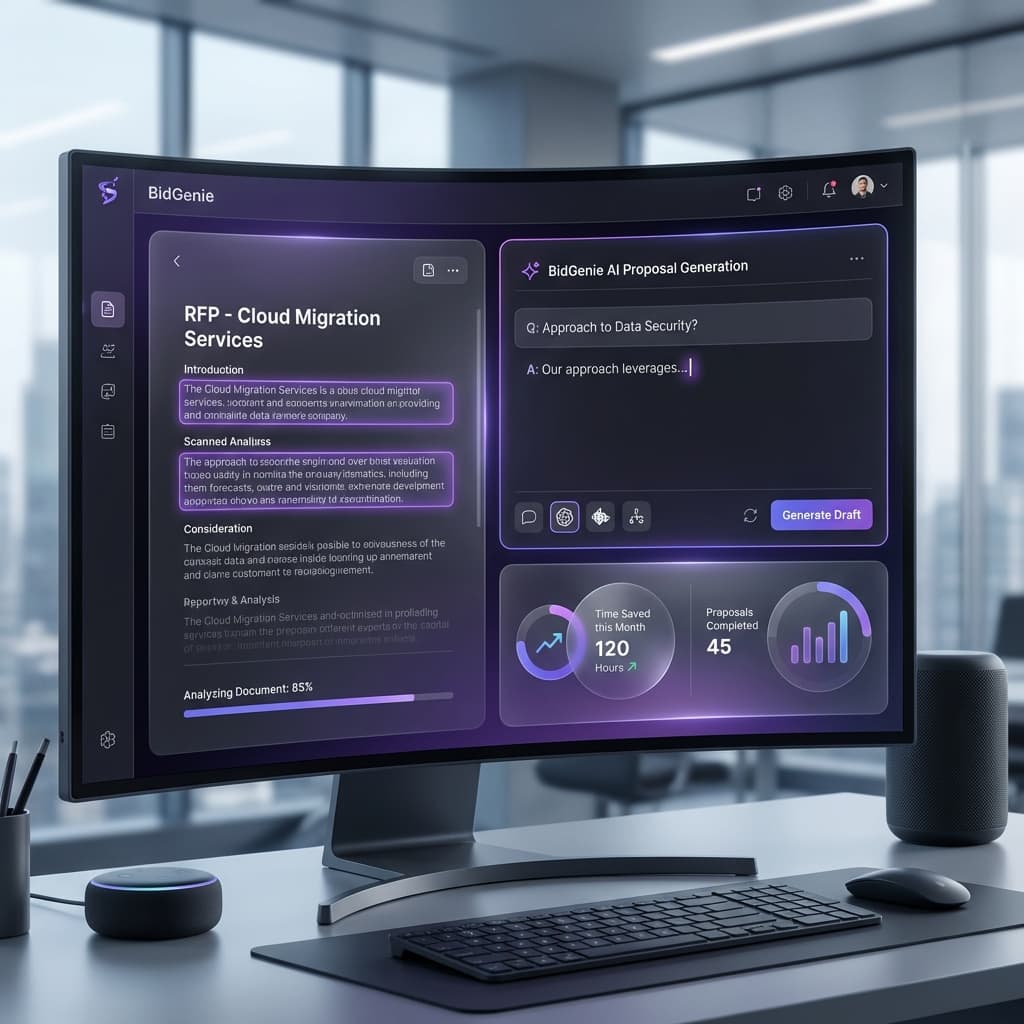
Loopio comparisons are usually about whether the team wants more library structure or a faster workflow that activates approved answers under deadline.
Who each tool fits
Loopio can fit teams whose operating model already revolves around curated content and library management.
Watchout in the legacy model
Teams may find that library upkeep becomes the center of the process when the real problem is producing faster, trustworthy first drafts under deadline.
Where BidGenie is different
BidGenie is framed as a way to activate approved answers in the drafting workflow while keeping reviewers in control, rather than making library management the center of the experience.
Fit comparison
Best fit
Loopio: Teams centered on maintaining a structured answer library
BidGenie: Teams centered on moving faster from intake to review-ready draft
Primary strength
Loopio: Library organization and reusable content workflows
BidGenie: Draft acceleration with approved-answer reuse
Evaluation focus
Loopio: Library maintenance and structured reuse discipline
BidGenie: Workflow speed, review trust, and operational simplicity
Migration friction reducers
- Start with one active response instead of a full platform migration.
- Bring existing approved answers and documents into the new workflow incrementally.
- Use demo-led evaluation when multiple stakeholders need to compare review models or rollout risk.
When not to choose BidGenie
- Organizations that want the library itself to be the primary operating system
- Teams preferring highly manual text control over draft acceleration
Proof path
- Use the product workflow pages to see how intake, drafting, review, and export are framed.
- Use checklist and migration resources for neutral proof before a tool decision.
- Use a demo when multiple stakeholders need to validate rollout shape or review governance.
Signals to stay with Loopio
- The answer library itself is your primary operating system and curation workflow.
- Your team is willing to invest heavily in content-library structure as the center of the process.
Signals to evaluate BidGenie
- You want approved answers to accelerate drafting rather than become a maintenance project.
- The team needs review-ready output faster without centering the entire experience on library upkeep.
FAQs
Who should keep Loopio?
Loopio can fit teams whose operating model already revolves around curated content and library management.
Where does BidGenie differ from Loopio?
BidGenie is framed as a way to activate approved answers in the drafting workflow while keeping reviewers in control, rather than making library management the center of the experience.
What is the lowest-friction way to evaluate a switch?
Start with one active response, bring existing approved answers into the workflow incrementally, and use demo-led review if multiple stakeholders need to validate the rollout shape.
Choose the evaluation path that fits the buying stage
Start free if you want to test the workflow with a live file. Book a demo if you are comparing rollout shape, review governance, or migration risk across stakeholders.